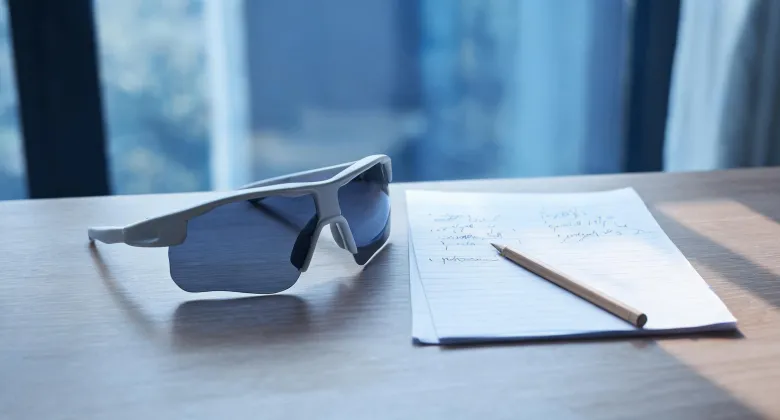
I've been handling side shield and safety eyewear sourcing orders for about eight years. In that time I've personally made — and documented — six significant sourcing mistakes, totaling roughly $14,000 in wasted budget and a few painfully polite emails from buyers who didn't come back. The single biggest lesson: there is no "best" side shield. The right one depends entirely on where the product is going.
I used to think that was a cop-out answer. Then I watched essentially the same product get rejected by three different buyers in the same quarter — an industrial distributor, a dental supply company, and an optical retailer. Each one had a completely different definition of "good." So here's how I now break it down, with the specific mistakes baked in.
Scenario A: You're supplying industrial or construction sites
If your end buyer is in construction, manufacturing, warehousing, or mining, the requirement is peripheral impact protection that survives abuse. That means side shields that are either permanently bonded or a robust slip-on design. The flimsy clip-on is fine for a dental office; on a job site it snaps off in a week.
This is where ANSI Z87.1 actually matters. If your customer's safety manager is worth their salary, they will ask for the test report, not just the marketing claim on the sell sheet. And here's the insider bit most suppliers won't tell you: the Z87.1 marking on a spec sheet is not the same as a current test report per SKU. Family certificates get reused across product lines that were never individually tested. Ask for the specific report. It's a red flag if they hesitate.
There's a real temptation here to stock one "universal" industrial shield to keep your catalog simple. The upside is fewer SKUs and easier inventory. The risk is fit complaints when it doesn't seat right on a particular frame — and in industrial accounts, one fit complaint can stall a reorder for months. I've made that call before, and the expected value math did not survive contact with a real safety manager.
What to source: impact-resistant polycarbonate, permanent or heavy slip-on mount, clear or grey. Pay the extra twenty cents. Cheaping out on a $0.90 shield to save $0.20 tends to cost you a $2,000 reorder the first time an audit flags it.
Scenario B: You're supplying labs, clinics, or chemical environments
The requirement here is splash and droplet protection, not impact. Shields need to seal closer to the frame — gaps are the enemy — and material compatibility with the chemicals in scope matters more than any impact rating.
I made this mistake myself. I quoted impact-rated shields for a dental supply buyer who actually needed splash-sealed ones. The shields were stronger, sure, but they had big ventilated gaps. Wrong tool for the job. About 1,400 units, roughly $1,100 wasted, plus a very polite but very clear "we won't be reordering that one" email. Looking back, I should have ordered samples and done a fit test with the buyer's actual frames. At the time, the spec sheet looked fine and I was in a hurry. It wasn't fine.
For this scenario, look at over-the-glasses (OTG) style side shields when the buyer serves people who wear prescription eyewear under PPE. Comfort and a close fit beat raw toughness here — every time.
Scenario C: You're supplying retail or optical — and this is where most people get it wrong
Here's where I'll say something most safety-focused suppliers won't: for a fashion or retail sunglasses buyer, heavy-duty rated side shields are usually the wrong product.
The standard advice is "always get the highest protection rating." Great for a hard hat. Bad for a sunglass brand whose customer bought them because they look good. Thick, certified, bulky shields ruin the silhouette, add weight, and raise unit cost for a protection claim the end customer neither needs nor asked for. You're paying for a feature that actively makes the product worse for its actual buyer.
If you're sourcing sunglasses with side shields for a retail or optical channel, prioritize:
- Low-profile, well-integrated design
- Comfort over long wear (temples, fit, weight)
- Frame compatibility with the specific sunglasses line
- A clean, quiet look — no chunky clip-on hardware
And skip the Z87 branding on retail SKUs. What most people don't get is that industrial buyers pay for the report, but retail buyers pay for the look and the story. Mixing those up is how you end up with inventory you can't move. I know because I did exactly that — 5,000 pairs of heavy ANSI-rated shields for a sunglasses brand that wanted something sleek. Too bulky, wrong market, about $3,200 straight to the clearance bin and a dent in my credibility.
How to tell which scenario you're actually in
Before you place the order, run these four questions:
- Who wears the end product, and where? (job site vs. lab bench vs. street)
- What does your buyer's compliance team require in writing — a test report on file, or just a marketing claim?
- What does the end customer actually judge the product on — does it look right, fit right, or survive a hit?
- What's your reorder risk? Can you move unsold inventory, or is this fashion-specific and stuck to one season?
If you're stuck between A and B, the deciding question is gaps. Industrial users will tolerate some opening in exchange for airflow; lab buyers usually can't. If you're stuck between B and C, ask whether the buyer is buying protection or buying a look. Almost nothing else matters after that.
The part I've come around on
Whatever you ship, the buyer reads it as a reflection of your judgment — not just the factory's. When I sent those heavy shields to the dental buyer, they didn't blame the factory six thousand miles away. They blamed me. That's the deal with sourcing. The quality isn't only in the product; it's in whether you matched the product to the need.
So the goal isn't the cheapest shield or the toughest shield. It's the right shield for the scenario. Get the scenario right first, and the specs mostly write themselves. That's the checklist I wish I'd had in year one — and the one I keep taped to my monitor now.