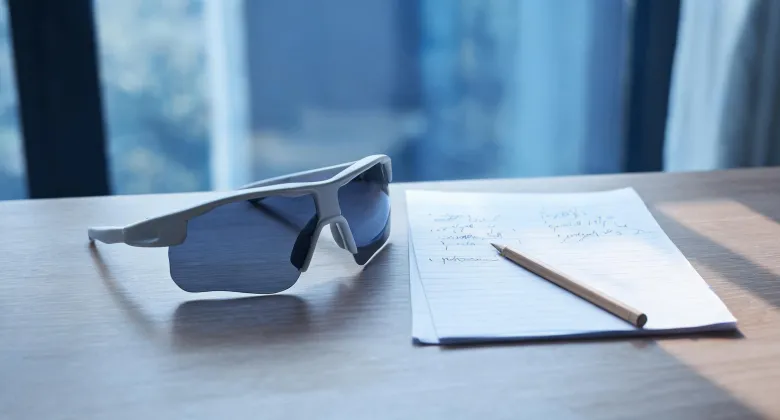
Last Q3, I spent a weekend doing a physical count of our cycling sunglasses inventory. Not because I enjoy that sort of thing, but because our return rate had crept up to 11% — and our wholesale supplier's response was: "The specs match the sample."
They did match the sample. The problem was, the sample itself was wrong.
That batch cost us $4,200 in purchase price. It probably cost us another $3,800 in returns, reships, customer support, and markdowns — not counting the sales we lost because the good SKUs were out of stock for three weeks.
That's when I started tracking something every sourcing manager should track but few actually do: the total cost of ownership on our cycling sunglasses purchases.
The Surface Problem: The Price Game in Wholesale Cycling Sunglasses
When you're sourcing wholesale cycling sunglasses — or browsing cycling sunglasses bulk listings — every supplier page gives you a unit price. $2.20 per pair. $1.90 per pair. $3.50 per pair with custom lenses.
That number is easy to compare. It's also easy to present to management. "We reduced unit cost by 15%." Sounds great.
But the unit price is almost never what actually costs you money.
The Deeper Issue: What's Actually Hiding in the Quote
After running a cost audit on $42,000 in cycling sunglasses orders, I found four categories of costs that 'cheap' suppliers rarely disclose upfront.
1. Sample iteration costs
A cheap factory might charge $150–200 per sample batch. If you go through four rounds of samples before approving a design (like we did in 2024), that's $600–800 before you even place the bulk order — 20–30% more than the price you originally negotiated.
Some cycling sunglasses factories and manufacturers in our network have folded sample costs into the order. But you only find that out if you ask.
2. QC failures and returns
I did a rough calculation on our 2024 data: we returned 340 pairs due to lens clarity issues, coating peeling, and loose hinges. The average cost to process a return — shipping plus handling plus refund — ran about $8.50 per pair. That's $2,890 I hadn't budgeted for, on a batch where I thought I'd saved $1,200.
3. MOQ-driven inventory bloat
This one still stings.
A cheaper supplier offered a $1.95 unit price at a 500-pair minimum. We 'saved' $960 on paper versus our regular supplier's $2.55 at 250 pairs. But we took the 500 because they were cheap, right? By end of quarter, 180 pairs were still on the shelf. Holding cost on that — storage plus tied-up capital — probably $450. And we ended up discounting them at 40% off to clear them, which cost us another $1,100 in lost margin.
4. The time cost — the most expensive line item
In June 2024, a new supplier promised 21-day delivery. It took 47 days. We missed our summer promotion window. The direct profit we missed on that batch — roughly $3,400.
That doesn't include the hours I spent chasing the order, or the customers who went elsewhere because we couldn't restock fast enough.
The Cost of Not Fixing This: A Total Cost of Ownership Breakdown
I built a TCO calculator for our cycling sunglasses sourcing. Here's a real comparison from one specific order with a 'cheap' supplier:
- Quoted unit price: $1.95/pair
- Quantity: 500 pairs
- FOB total: $975
- Sample iterations (4 rounds): +$640
- QC returns (~8% return rate): +$340
- Inventory holding & markdowns: +$1,550
- Missed sales window (estimated): +$3,400
- Total cost of ownership: ~$6,905, or $13.81 per pair effectively
Our regular supplier quoted $2.55 per pair at 250-pair minimums. Running the same TCO estimate, a comparable order would have landed around $1,275–1,600 in total cost. That 'cheap' cycling sunglasses order cost us nearly ten dollars more per pair.
This is the core issue. The lowest quote isn't the lowest cost. It's just the lowest number someone put in a spreadsheet.
The Fix: How to Evaluate Wholesale Cycling Sunglasses Suppliers
I don't have a perfect formula. But I do have a checklist that's saved me from several bad decisions since.
Ask for a total landed cost estimate. Don't ask for unit price. Ask: "If I order 500 pairs with prescription lenses, packaging, and delivery to [port], what's the total?" A good cycling sunglasses manufacturer or factory should be able to give you that number confidently.
Request a paid sample before committing. In our industry, sample fees run $50–100 for a decent pair. If a supplier can't produce a quality sample, they can't produce a quality bulk order.
Ask about their QC failure and return rates. If a supplier says "near zero," that's a red flag. No one has zero defects. An honest supplier will have a baseline number and explain how they handle returns.
Calculate your inventory carrying cost. If you're not sure, it's roughly 15–25% of the wholesale price per pair, annually. If you can't sell through in a month, adjust your effective cost upward for the 'cheap' minimum order quantity.
Get delivery guarantees in writing with penalty clauses. This is where I got burned. A verbal promise of "21-day delivery" is worth nothing. A contract with late-delivery penalties is worth something.
At the end of the day, wholesale cycling sunglasses sourcing — like any procurement decision — comes down to total cost. The cheapest quote is just the starting point. The expensive part comes later.
I've stopped chasing the lowest unit price. Now I ask one question before every order: what's this actually going to cost us by the time it's sold? That's the number that matters.