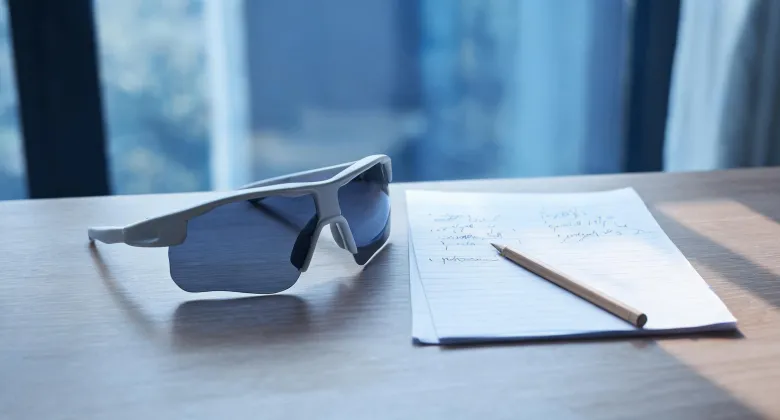
If you're sourcing wholesale cycling sunglasses on a deadline, the cheapest quote is usually the most expensive option on the table. Not because cheap vendors are dishonest—cheap quotes are just priced for "whenever it lands," and when you've got an event date, that's a cost you pay later. I found that out the hard way.
I'm the office administrator for a roughly 300-person company that runs an annual charity cycling event. I manage most of our ordering—about $180,000 a year across a dozen vendors, everything from catering to signage to the cycling sunglasses we hand out to riders and staff. I report up to both operations and finance, which means I get judged on two things at once: keeping costs down, and never missing a date. Those two goals fight each other more than you'd think.
The order that taught me how expensive "cheap" actually is
In March 2023, we needed a bulk order of cycling sunglasses for our spring event. About 800 standard pairs for riders, plus a smaller batch of prescription cycling sunglasses for our event crew and two sponsors' staff who need corrective lenses. I found a new vendor online—a small cycling sunglasses factory that quoted about $2.40 a pair on the standard pairs, roughly 30% below what our regular supplier offered.
I took it. I was pretty proud of myself, honestly.
The order shipped—or rather, it "shipped" according to a tracking number that someone created but never updated. Four days before the event, I had no sunglasses. The vendor's rep kept saying "probably tomorrow." We ended up buying last-minute replacements from a local bike shop at retail, which set us back about $9,400 on 600 pairs, and I spent the better part of two days on the phone doing damage control with my VP.
That's when I stopped treating the quote price as the real price.
What you're actually buying when you pay for certainty
Here's the thing that took me a while to understand properly: when you pay a rush fee to a cycling sunglasses manufacturer, you're not just paying for speed. You're paying for the vendor to commit a defined production slot to your order and tell you when it'll actually be done.
1. Missing the date costs way more than the rush fee
The math is almost never close. In 2024 we paid about $520 extra to expedite an order so it landed five days before our event. Compared with the cost of a scramble—last-minute retail replacements, staff overtime, the reputational hit with a sponsor—that $520 was a rounding error. The rush fee on a wholesale cycling sunglasses order is usually a percentage, not a multiple. The cost of missing an event is a multiple.
2. "Probably on time" is the biggest risk in sourcing
After getting burned twice by "probably," I now treat an unconfirmed delivery date as a no. It makes for a slightly awkward conversation with suppliers, but it's changed how we buy. We don't just ask "what's your lead time"—we ask "can you commit to a ship date in writing, and what happens if you miss it?" A vendor who can't answer that cleanly is telling you everything you need to know. The uncertainty itself is the cost. An uncertain cheap quote is more expensive than a certain slightly-higher one.
3. Rush orders aren't just "faster"—they're a different workflow
This is where the surface illusion trips people up. From the outside, a rush order looks like the cycling sunglasses factory just working a little faster. The reality is that rush orders usually need a dedicated production slot, reshuffled QC, and sometimes a different lens source for prescription cycling sunglasses if the grinding is done off-site. That's why rush fees exist—and why they're not negotiable to zero. You're paying for a lane to open in a queue that was already full.
Something vendors won't tell you about "standard turnaround"
Here's a bit of insider information that changed my whole approach: a "20-day standard turnaround" from most cycling sunglasses sourcing suppliers includes buffer. The vendor is building in slack to manage their queue across all their clients. Your actual order might only occupy 12 days of production if the line is clear. That's not dishonesty—it's how they keep promises across dozens of orders. But it means the gap between "standard" and "rush" is often narrower than the price difference suggests. Asking a solid supplier whether they can slot your order into an existing buffer, instead of buying a formal rush slot, has saved us real money more than once.
"But aren't you just paying to feel safe?"
The obvious pushback: you're rewarding vendors for charging more, and you should just plan better. Fair. And honestly, if you've got 90 days of runway and a predictable cycle, the cheapest cycling sunglasses quote is fine and I'd tell you to take it. We still do that for most of our core orders.
But "plan better" doesn't help the week before an event when a shipment is in limbo. And it doesn't help when a sponsor forwards two dozen prescription cycling sunglasses to your order six weeks out because their team changed. The premium isn't a tax on laziness—it's insurance for the things you can't forecast.
I can only speak to our situation. We run a fixed-date event with a hard deadline, which makes delivery certainty genuinely expensive when it fails. If you're a distributor with rolling stock and no single date that matters, the calculus is different—you can eat a two-week delay. Your mileage will vary.
What I do now, in practice
Three things, every order that has a date attached:
- I ask for a committed ship date in writing before I pay a deposit—not a lead time, an actual date.
- I separate "standard order" from "date-critical order" and only pay the certainty premium on the second one. About 20% of our orders fall into that bucket.
- I keep one proven cycling sunglasses manufacturer on standby for rush orders, even if their base price is a little higher. Knowing who can actually deliver beats a lower quote from someone I've never tested.
Bottom line: in urgent sourcing, buy the deadline, not the discount. The cheapest quote is a promise about price. What you actually need is a promise about time—and that promise costs something. In my experience, it's the cheapest thing you can buy.